Crown thinning in Peckham
If you are looking for crown thinning in Peckham, you may already know that a tree can become too dense for its own good. When a canopy is packed with heavy foliage and crossing branches, it can block light, catch the wind, and start to look untidy or overgrown. A well-done crown thinning service helps reduce that congestion while keeping the tree’s natural shape intact. For homeowners, landlords, housing associations, and businesses across Peckham, this is often the right balance between improving a tree and preserving what makes it attractive.
Local customers often ask for crown thinning when they want more daylight in a garden, less shade over a patio, or a lighter canopy near a building. It can also help with airflow, which is especially useful in dense urban streets where gardens are enclosed by walls, fences, and neighbouring properties. In a busy area such as Peckham, where mature trees are a valued part of the landscape, choosing a careful tree surgery team matters. You want someone who understands how to thin a crown properly without stripping it back too much.
Our approach is practical, tidy, and tailored to the property in front of us. Whether the tree is in a back garden, front garden, communal space, school grounds, retail forecourt, or commercial yard, the aim is the same: reduce density, keep the tree healthy, and improve the surrounding space. If you are weighing up whether crown thinning is the right option, this page explains what the service involves, why it is chosen, how it works, and what local Peckham customers should consider before booking.
What crown thinning means for your tree
Crown thinning is the selective removal of smaller branches throughout the tree’s outer canopy. The goal is not to reduce the overall height dramatically or change the tree into a different shape. Instead, it opens the crown so that light, air, and movement can pass through more easily. A skilled arborist will remove branches carefully, maintaining the tree’s natural outline and keeping the structure balanced.
This is different from topping, which is harmful, and different from heavy reduction, which can leave a tree looking lopped and stressed. Crown thinning in Peckham is usually chosen when a tree is healthy enough to keep, but its canopy has become too compact. The work can improve the appearance of the tree and can also make nearby areas more usable, especially in homes where the garden feels dark or closed in.
Not every tree needs the same amount of thinning. Some only require a modest reduction in density, while others benefit from more careful selective pruning because of the species, age, shape, or location. A proper assessment helps identify the right approach, taking into account the tree’s condition and the setting around it.
How it differs from other tree surgery services
Crown thinning is only one part of wider tree care. People sometimes confuse it with crown lifting, which removes lower branches to increase clearance, or crown reduction, which shortens the spread or height of the tree. Thinning focuses on the internal and outer branching structure rather than changing the tree’s overall size. That is why it is often preferred when the tree is already a good fit for the garden, but the canopy is too dense.
Common reasons customers ask for thinning include:
- To allow more natural light into the home or garden
- To reduce wind resistance on exposed sites
- To improve the view through the canopy
- To lessen the visual bulk of an overgrown tree
- To help air circulate around the tree and neighbouring plants
In practical terms, crown thinning can be a very useful middle-ground solution. It is often the right choice when the tree still has plenty of life and value, but the canopy has become too congested for comfortable everyday use of the space around it.
Why crown thinning is popular in Peckham
Peckham has a mix of terraces, maisonettes, converted flats, small commercial premises, schools, and shared residential spaces. Trees in these settings often have to live close to buildings, fences, paved areas, and neighbouring gardens. In that kind of environment, a dense canopy can quickly start to feel intrusive. Crown thinning offers a way to improve the balance without removing a tree that people still want to keep.
Many local properties have mature trees that were planted years ago, sometimes long before the surrounding area became as busy and built up as it is today. As those trees grow, they may cast deeper shade over gardens, driveways, or windows. They may also create a feeling of enclosure, which can matter a great deal in smaller outdoor spaces. A careful crown thinning service helps create a lighter, more comfortable environment while respecting the tree’s role in the landscape.
Peckham also sees strong seasonal changes in how people use outdoor space. In warmer months, many households want their gardens to feel brighter and easier to sit in. In wetter or windier periods, heavy canopies can hold moisture and catch gusts. A tree with a lighter crown often performs better in these conditions, and the space around it can feel more manageable.
Local settings where thinning is often requested
We regularly see crown thinning requested for trees in places such as:
- Terraced house gardens with limited daylight
- Shared courtyard spaces and communal gardens
- Front gardens close to pavements or boundary walls
- Commercial yards and staff areas where space is tight
- Properties near busy roads where overhanging growth needs careful control
In a location like Peckham, access can also be a major factor. Narrow side passages, shared entrances, controlled parking, and limited loading space can affect how work is planned. A local tree care team understands these realities and can organise the job in a way that reduces disruption for residents, neighbours, and businesses.
That local knowledge matters because the best tree work is not just about the tree itself. It is also about working safely and neatly in a dense urban area where space is often at a premium.
What is included in a crown thinning service
A professional crown thinning service should begin with a proper inspection of the tree and its surroundings. The team should look at the species, condition, size, previous pruning history, nearby structures, and any signs of stress or disease. From there, they decide how much to thin and which branches should be removed to maintain balance and health.
Typically, the work involves selective pruning throughout the canopy, rather than taking large sections off one side. The aim is to remove a proportion of smaller branches and any weak, crowded, rubbing, or poorly placed growth. Done properly, this improves structure while keeping the tree looking natural. It also helps prevent the common problem of trees being made too sparse in one area and too dense in another.
In many cases, the service includes clearing away arisings and leaving the site tidy when the job is complete. For homes and businesses in Peckham, that can be just as important as the pruning itself. Few customers want branches, twigs, and leaf litter left around after work has been carried out, especially where access is shared or pedestrian space is limited.
Typical steps during the job
- Initial survey and discussion of the customer’s aims
- Assessment of tree health, access, and any nearby hazards
- Selection of branches for removal based on balance and structure
- Careful pruning to reduce density without overcutting
- Removal of waste and a tidy finish to the working area
Important note: every tree is different, and a responsible team will not promise a one-size-fits-all outcome. A broad, established tree in a rear garden will need a different level of thinning than a younger ornamental tree near a front boundary or a large canopy over a commercial yard.
For customers who are planning further tree work, it can also be sensible to discuss whether crown lifting, deadwood removal, or light formative pruning is needed at the same time. Combining tasks, where appropriate, may reduce disruption and help create a more coherent result.
Benefits of crown thinning for homes and businesses
The most obvious benefit of crown thinning is improved light. If a tree has started to dominate a small garden or block sunlight from windows, thinning can make a noticeable difference. It can transform a space from feeling enclosed to feeling more open and usable. For many Peckham households, that means a garden becomes more enjoyable, a room feels brighter, and plants underneath the canopy have a better chance of thriving.
Another major benefit is reduced wind resistance. Dense canopies can act like a sail, especially in exposed positions or where trees sit on corners, open plots, or elevated sites. Thinning the crown allows wind to pass through more freely, which can lower strain on branches and help the tree cope better in breezy weather. While no pruning removes all risk, a lighter canopy can be a sensible step toward better long-term structure.
There are also aesthetic advantages. A crowded canopy can look heavy and tangled, even on a healthy tree. By selectively removing cluttered growth, a tree can appear more refined, balanced, and attractive. For residential customers, that may improve kerb appeal. For business premises, it can create a better impression for visitors, staff, or customers using the outdoor area.
Practical advantages for local customers
- More daylight reaching the property
- Improved airflow around the canopy
- Better use of gardens, patios, and outdoor seating
- Less dense overhang near roofs, windows, and boundaries
- A tidier and more balanced appearance
Commercial customers in Peckham may also benefit from lower levels of debris buildup in car parks, service yards, or access routes. Smaller and more evenly spaced branches can mean less frequent obstruction and less leaf load in some situations. That said, the outcome depends on the tree, the site, and the level of thinning chosen.
If your main concern is shade, visibility, or crowding rather than tree size, crown thinning may be the most appropriate first step.
How we approach crown thinning in Peckham
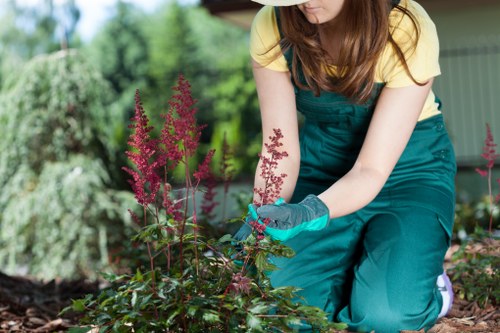
Every site in Peckham comes with its own practical challenges. Some trees are squeezed between extensions and boundary fences. Others sit in rear gardens that can only be reached through the house or a narrow side path. Commercial sites may have time restrictions, limited vehicle access, or the need to keep foot traffic moving safely. A local team plans around those realities from the start, rather than treating access as an afterthought.
Before any pruning begins, it is important to agree on the purpose of the work. Are you trying to let more light into a kitchen or living room? Do you need to open up a garden for children, pets, or entertaining? Is the aim to reduce wind loading in a vulnerable position? These answers shape the type and amount of thinning needed. The more clearly the goal is defined, the better the result is likely to be.
A good crown thinning job should look natural once completed. The tree should not appear patchy, lopsided, or stripped out. Instead, the canopy should retain its shape while looking lighter and more breathable. That is why experience matters. Trees need a considered eye, not just a saw and a quick removal of branches.
What makes a local team useful
Working locally means understanding the conditions that affect real jobs across Peckham, including parking limits, shared drives, restricted access, and busy residential streets. It also means being familiar with the kinds of trees commonly seen in local gardens and communal areas. That practical familiarity helps the work run more smoothly and often makes the planning process easier for the customer.
We also consider:
- Neighbouring properties and overhanging growth
- Potential disturbance to tenants or businesses
- The need to keep pathways and entrances clear
- The safest way to move waste off site
- Whether other tree care tasks should be done at the same time
When people contact us about crown thinning, they usually want a straightforward answer: Can this tree be improved without losing its character? In many cases, the answer is yes, provided the pruning is selective, measured, and suited to the tree’s condition.
Useful outcome for a typical Peckham home
For a terraced property with a mature rear-garden tree, crown thinning can mean more evening light, a garden that feels less cramped, and less pressure from dense branches overhanging the fence line. For a shop, café, or office with planting nearby, it can improve the appearance of the frontage and make the surrounding area feel less enclosed.
Preparation checklist before your appointment
A little preparation helps the work go smoothly and keeps disruption to a minimum. You do not need to do anything complicated, but a few simple steps can make a difference, especially in a busy urban area. If your property has restricted access or shared boundaries, think in advance about what might need to be moved or unlocked before the team arrives.
Here is a practical checklist to help you prepare:
- Clear access to gates, side paths, or rear entrances where possible
- Move garden furniture, ornaments, or fragile items away from the work area
- Let neighbours know if branches may need to be overhung or if access is shared
- Keep pets and children away from the working zone during the visit
- Identify any areas where waste removal may be harder because of narrow access
- Mention any concerns about tree health, fungus, dead limbs, or previous pruning
It is also sensible to think about what you want the outcome to achieve. Some customers want more daylight, while others want the tree to feel lighter but still provide screening. If you are not sure how much thinning is appropriate, speak openly about your goals. A professional team should be able to explain the likely options in plain language.
For customers comparing services, ask whether the work will be selective and balanced, rather than heavy-handed. That question can tell you a lot about how the job is likely to be carried out.
Contact us today if you would like to talk through your tree, your space, and the sort of finish you are hoping for.
Pricing factors for crown thinning
People often want an idea of cost before booking, which is entirely understandable. While exact prices are not listed here, several factors affect the quote for crown thinning in Peckham. The size and species of the tree are important, as larger or denser trees usually take more time and skill to thin correctly. The number of trees involved also matters, as does the condition of each tree and the amount of waste created.
Access is another major factor. In Peckham, some jobs can be completed with easy side access, while others require careful handling through tight passages, stairways, or shared courtyards. Parking and loading conditions can also influence how the work is planned. If equipment or waste has to be moved a long way by hand, the overall time on site may increase.
Other considerations can include whether additional services are needed, such as removing deadwood, lifting the crown, or clearing storm-damaged branches. If the tree is close to cables, buildings, or high-traffic areas, extra care and planning may also be required. Good quotations are based on the real conditions of the site, not on rough guesses.
What can affect the quotation?
- Tree height, spread, and density
- Access to the garden or commercial site
- Proximity to buildings, fences, and utilities
- Waste removal volume
- Whether the work is part of a wider tree care plan
If you are seeking a quote, be ready to describe the tree and share what you want it to achieve. A clear brief helps the team give a more accurate estimate and ensures the finished work matches your expectations.
Request a free quote if you want a straightforward assessment of your tree and the practical options available.
Why choose a local company for tree work in Peckham
Using a local team for tree surgery has clear advantages. A company that regularly works in Peckham is more likely to understand local property layouts, traffic patterns, access constraints, and the practical needs of neighbouring residents. That can make the process smoother from the first enquiry through to the final tidy-up.
Local customers often prefer a service that is responsive and easy to arrange around real-life schedules. This is especially useful for busy households, landlords managing occupancy, or businesses that cannot afford unnecessary disruption during opening hours. Local familiarity also helps when a site presents unusual access issues or when care is needed near shared boundaries.
Another benefit is that local tree surgeons tend to work in a wide variety of nearby settings, from compact gardens and street-facing plots to managed commercial premises and community spaces. That broad practical experience helps when selecting the right crown thinning method for the job. Different trees and sites call for different levels of pruning, and experience is what helps keep the work sensible.
Areas covered around Peckham
Customers often need tree work not only in Peckham itself but also in nearby areas where similar property types and access conditions are common. Work may also be arranged across surrounding neighbourhoods such as:
- Nunhead
- Bermondsey
- Camberwell
- Brixton
- New Cross
- Deptford
- Walworth
- Rotherhithe
Whether the job is at a family home, rental property, office, or shared outdoor space, the same principle applies: the tree should be improved without unnecessary damage or overcutting. That is what makes careful crown thinning such a useful service in a built-up area.
Common customer questions about crown thinning
Many customers are unsure whether their tree needs thinning, reduction, or simply maintenance. The questions below reflect the sorts of concerns people often raise before booking tree work. If your own situation feels slightly different, that is normal. Trees vary, and so do the spaces they live in.
Will crown thinning make my tree look bare?
Not if it is carried out properly. Crown thinning is intended to reduce density while keeping the tree’s natural form. The aim is to make the canopy lighter, not sparse. If too much is removed, the result can look uneven or stressed, so a careful approach is essential.
How much can be removed?
The amount removed depends on the tree, its species, and its condition. A good arborist will consider how much thinning is suitable rather than applying a fixed rule. The work should be enough to improve light and airflow without compromising the tree’s overall health and structure.
Is thinning suitable for all trees?
No. Some trees respond well to thinning, while others may need a different kind of pruning or very limited intervention. A proper inspection helps decide whether the service is appropriate. If a tree is already stressed, diseased, or structurally weak, the plan may need to be adjusted.
Can crown thinning help with neighbour disputes over overhanging branches?
It can help reduce the spread of dense growth, but the exact approach depends on where the branches are, what the tree needs, and what is legally and practically appropriate. The focus should always remain on responsible tree care and a sensible result rather than cutting simply because a tree feels inconvenient.
Do I need to be home during the work?
That depends on access and the arrangements made in advance. Some customers prefer to be present at the start or finish, while others arrange access and continue with their day. The important part is agreeing the details beforehand so the team can work safely and efficiently.
Still unsure? Ask for a site assessment and discuss your concerns directly. That is often the best way to decide whether crown thinning is the right choice.
Book your service now if you are ready to improve the light, shape, and feel of your tree.
Signs your tree may be ready for thinning
There are a few common signs that a tree could benefit from selective thinning rather than leaving it untouched. If your canopy has become so dense that daylight is noticeably reduced, if branches are rubbing together, or if the tree seems to catch every gust of wind, it may be time to consider action. Dense growth can also lead to a more cluttered look and make the area underneath the tree less inviting.
In domestic settings, you might notice that grass is struggling beneath the canopy, furniture areas feel dark, or upstairs rooms receive less light than before. In commercial settings, the signs may be different: branch overhang may interfere with signs, paths, loading areas, or parking, and the space may simply feel too enclosed for comfortable daily use.
Sometimes the tree itself is healthy, but its crown no longer suits the space around it. That is often the strongest case for thinning. The tree remains, but the canopy becomes more workable for everyone using the property.
When another service may be better
There are times when thinning is not the best answer. If a tree is too tall for its location, a reduction may be more suitable. If lower branches are the main issue, crown lifting could be the better choice. If there are dead, damaged, or crossing limbs that need attention, a mix of services may be recommended. A good team will explain these options clearly and help you choose the most appropriate one.
If you would like advice tailored to your tree, contact us today and ask about the most suitable pruning approach for your property in Peckham.
Booking crown thinning in Peckham
Booking should be simple and focused on what you want to achieve. Start by describing the tree, the property type, and the issues you are experiencing. If you can explain whether the main concern is shade, access, appearance, airflow, or overhanging branches, it will help shape the quote and the proposed work. Photos can also be useful when discussing the job, especially if access is tight or the tree is in a hard-to-view location.
When choosing a provider, look for clear communication, a sensible approach to pruning, and an understanding of local conditions. In a place like Peckham, practical experience with narrow access, shared boundaries, and mixed residential-commercial environments is a real advantage. The right team will take the time to assess the tree properly rather than rushing into work that may not suit it.
Most importantly, crown thinning should leave you with a tree that still feels like part of the property, not something that has been harshly altered. Done well, it improves the experience of living or working around the tree while keeping the natural presence that made it worth retaining in the first place.
Before you enquire, consider these points
- What problem are you trying to solve?
- Is the tree close to your home, boundary, or business frontage?
- Do you need more light, better airflow, or a lighter appearance?
- Are there access issues through side gates, alleyways, or shared areas?
- Would you like one tree looked at or several at the same time?
Contact us today if you want to talk through your tree and arrange crown thinning in Peckham. Whether you are a homeowner, landlord, property manager, or business owner, a careful and local service can help make the process straightforward.
Request a free quote and take the first step toward a healthier, lighter, more manageable tree.